
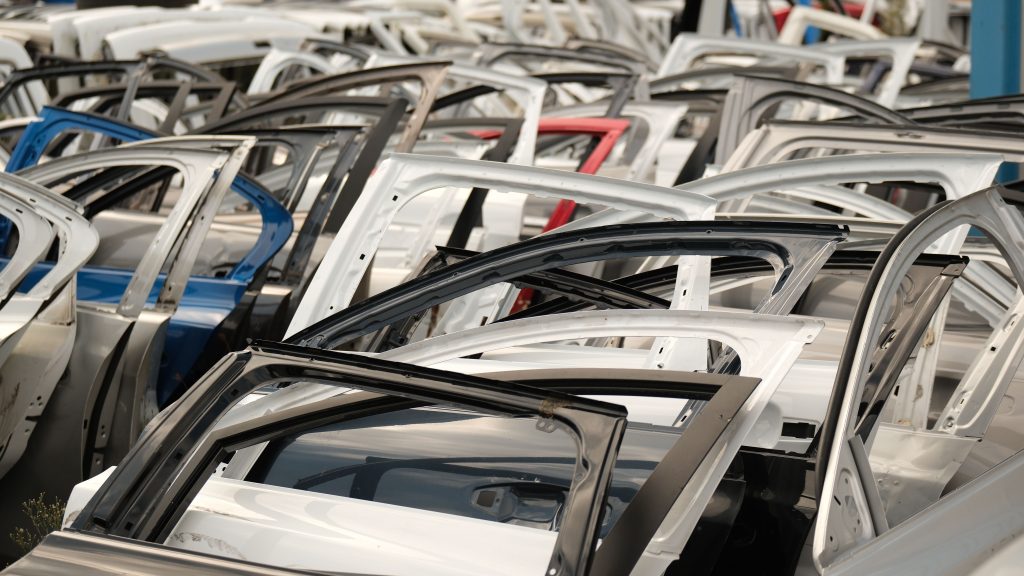
Automotive metal stamping brings sourcing requirements that go beyond whether a supplier can make the part. Buyers also have to consider production volume, launch timing, material requirements, dimensional expectations, documentation, and the consequences of a late or nonconforming component reaching an assembly operation. For an overview of where stamped components are used in vehicles, see how metal stamping is used in automotive production.
What Makes Automotive Stamping Sourcing Different?
Automotive sourcing puts schedule and consistency under particular pressure because stamped components often feed another manufacturing or assembly operation. A late shipment or an out-of-spec part can interrupt more than the stamping job itself. Buyers need to evaluate whether a supplier’s available capacity, tooling plan, material sourcing, and production schedule align with the program’s annual volume and required delivery dates.
Dimensional and material requirements also tend to be established before the supplier enters the picture. That means the sourcing decision is less about choosing what material or tolerance is convenient for the stamper and more about confirming that the supplier can work within the requirements already defined by the customer. The more tightly a stamped part connects to downstream assembly, the more important that fit becomes.
What Automotive Components Are a Good Fit for Stamping?
Metal stamping auto parts include many small and mid-size components such as brackets, clips, shields, contacts, retainers, tabs, and mounting components. Rather than looking at the component name alone, buyers should consider what its geometry and downstream use demand from the stamping supplier.
A bracket with multiple pierced features may put more emphasis on positional accuracy, while a clip may depend on forming consistency and material behavior. Shields or mating components may have flatness, edge, or burr requirements that affect subsequent assembly. Parts that will be plated or coated may also require coordination between the stamping operation and secondary processing, so those requirements should be discussed before tooling and pricing are finalized.
How Does Material Choice Affect Automotive Supplier Selection?
Material specifications affect both the part and the equipment required to produce it. HSLA steels generally require higher forming loads and can show more springback than lower-strength steels, which makes press capacity and tooling design part of the supplier-fit discussion. Aluminum also presents springback and galling considerations and may require different tooling and lubrication approaches than steel. Galvanized material adds another factor because the coating can influence die wear and its condition after forming may matter to the finished component.
The buyer does not need to redesign the stamping process during sourcing, but should confirm that the supplier understands the specified grade, thickness, temper, and coating and has evaluated them against the proposed equipment and tooling. When material strength raises forming-load questions, Precision Stamping’s guide to matching a stamped part to the right press tonnage provides useful background. Buyers should also establish what material certifications or other material documentation their program requires before the first order is released.
What Quality and Certification Requirements Apply to Automotive Stamping?
Automotive programs may carry quality requirements beyond a supplier’s general quality management system. IATF 16949 is the automotive quality management standard built on ISO 9001, and many OEMs and Tier 1 suppliers require it for production-part suppliers. PPAP and APQP are also common within automotive supply chains, along with customer-specific requirements that can add documentation, approval, or process-control expectations.
Buyers should determine which requirements apply to their particular program rather than assuming every automotive stamping job needs the same package. Confirm required certifications, PPAP level, APQP expectations, customer-specific requirements, and approval responsibilities before supplier selection.
How Do You Evaluate a Stamping Supplier for Automotive Work?
Start with capacity in relation to your program, not capacity in the abstract. The proposed equipment and production schedule should support the annual quantity, launch date, release pattern, and expected changes in demand. A supplier that fits a lower-volume service program may not be the right fit for a much larger production schedule, while a supplier structured around large recurring runs may not be economical for smaller releases.
Responsibility for tooling, changes, packaging, and logistics should also be clear before launch. The sourcing agreement should define tooling ownership and maintenance responsibility, how proposed material or process changes are communicated and approved, and what packaging, labeling, shipment frequency, and delivery requirements apply. These details reduce ambiguity once production is underway.
What Should You Ask Before Placing an Automotive Stamping Order?
A final supplier review should focus on the requirements that determine whether the stamper fits the specific program. The goal is to uncover gaps in capacity, material experience, tooling responsibility, documentation, or logistics before those gaps affect a launch or production schedule.
Use questions that require concrete answers about the proposed work rather than general statements about capability. The answers should also be specific enough that procurement and engineering teams can compare suppliers against the same requirements.
- Can the proposed press and tooling approach support our annual volume and launch schedule?
- What experience does the supplier have with this material grade, coating, or a comparable forming requirement?
- Who owns the production tooling, and how are maintenance and major repairs handled?
- What approval is required before material, tooling, or process changes are made?
- Can the supplier meet our packaging, labeling, delivery, and release requirements?
- Does our program require IATF 16949, PPAP, APQP, or customer-specific documentation, and can the supplier meet those requirements?
Why Work With Precision Stamping?
Precision Stamping has been in operation since 1997 and supports stamping projects with in-house engineering, in-house toolmakers, and outside tool and die partners. Its quality department is involved from quoting through final audit, and buyers can review its current equipment and processes on the Precision Stamping metal stamping capabilities page.
The company publishes production quantities from one piece to one million pieces and supports work from prototyping through the end of product life. It also offers contract stamping for one-time runs and multi-year programs, inventory management for up to 400 SKUs, and surge or bridge capacity for customers dealing with press downtime or new-project ramp-ups. Those capabilities can be relevant for components, lower-volume programs, service parts, and other automotive work that fits Precision Stamping’s equipment and production range.
Sourcing a Stamped Automotive Component?
If you are sourcing stamped components for an automotive application, contact Precision Stamping to discuss your part, material, tooling, volume, and delivery requirements.